
Legacy System Modernization
Modernize legacy systems without the risk. We migrate critical applications and databases off aging infrastructure with zero-downtime execution, so you get modern performance without disrupting the business that depends on it.
Legacy System Modernization Services
We rebuild the technical foundation underneath your business application modernization and database modernization delivered with rigorous planning, clean data migration, and no unplanned downtime.
Application Modernization
We re-platform and refactor aging applications onto modern frameworks and infrastructure, preserving business logic while removing the technical debt that slows every new feature down.
Database Modernization
Structured, zero-downtime migrations off legacy databases with full data integrity checks at every step so historical records and reporting keep working exactly as they did before.
Legacy System & Migration
Modernizing legacy applications, refactoring codebases, and migrating data to high-performance cloud environments without interrupting daily operations.
From legacy bottlenecks to agile, cloud-native scale.
Application Modernization
Transforming monolithic legacy codebases into scalable, high-performance, cloud-ready applications.
Monolith-to-microservices code refactoring
API wrapping to unlock legacy backends
User interface and front-end modernization
Core application performance optimization
Database Migration
Executing secure, seamless data transfers to modern cloud databases without business interruption or data loss.
On-premises to cloud database migration
SQL-to-NoSQL or distributed database conversions
Automated ETL pipelines, schema redesign, and data cleaning
Real-time data synchronization for continuous uptime
Legacy modernization questions
What teams usually need to know before they modernize an application or move a database.
What is legacy system modernization?
Legacy system modernization is the work of moving aging applications and databases onto a stack the business can keep changing. That includes refactoring a monolith, wrapping old backends with APIs, redesigning the interface, and migrating data, without throwing away the business logic that already works.
Why do businesses modernize legacy systems?
Old systems slow every new feature, raise hosting cost, and make outages harder to contain. Modernization reduces that drag so teams can ship independently, scale the parts that need it, and keep historical data and reporting intact.
What is the difference between application modernization and database modernization?
Application modernization changes how the software is structured and delivered: services, APIs, and the user interface. Database modernization moves the data itself, including schema redesign, SQL-to-NoSQL conversions, and a cutover that keeps records consistent. Most programs need both.
Can a legacy system be modernized without downtime?
Yes, when the migration is planned that way. Trimate uses parallel runs, change data capture, and a rehearsed cutover so daily operations continue while the new system is proven. The goal is no unplanned outage and a rollback path if the cutover is not ready.
How does a modernization project start?
It starts with the systems that are actually in the way: dependencies, data, and the failure modes that would hurt the business. From there the work is sequenced into application changes and data migration, with integrity checks at each step rather than a single risky replacement.
Do you rewrite the whole system from scratch?
Rarely as the first move. A full rewrite copies today’s behavior and then discovers the exceptions the old system already handled. Trimate usually modernizes in slices, keeps the old system as the source of truth until each slice is proven, and reserves a rewrite only for parts that cannot be changed safely any other way.
How do you scope a modernization project, and what drives cost?
Scope starts with what is in the way today: which applications and databases must move, how coupled they are, how clean the data is, and what downtime the business can tolerate. Cost follows that scope, not a fixed package price. Drivers include the size of the surface area, the number of integrations, whether application and database work run in parallel, how many rehearsal cutovers you need, and whether we modernize in slices or only a thin API wrapper first. Engagements begin with a short discovery so the roadmap and effort bands reflect your systems before a build commitment.
Case Studies
Real-world transformation stories demonstrating how Trimate helps organizations modernize systems, implement AI, and build scalable digital platforms.
Cut manual processing time by 68% across three departments
A practical AI workflow deployment that replaced repetitive manual intake with intelligent document processing freeing teams to focus on higher-value work.
Read the Case Study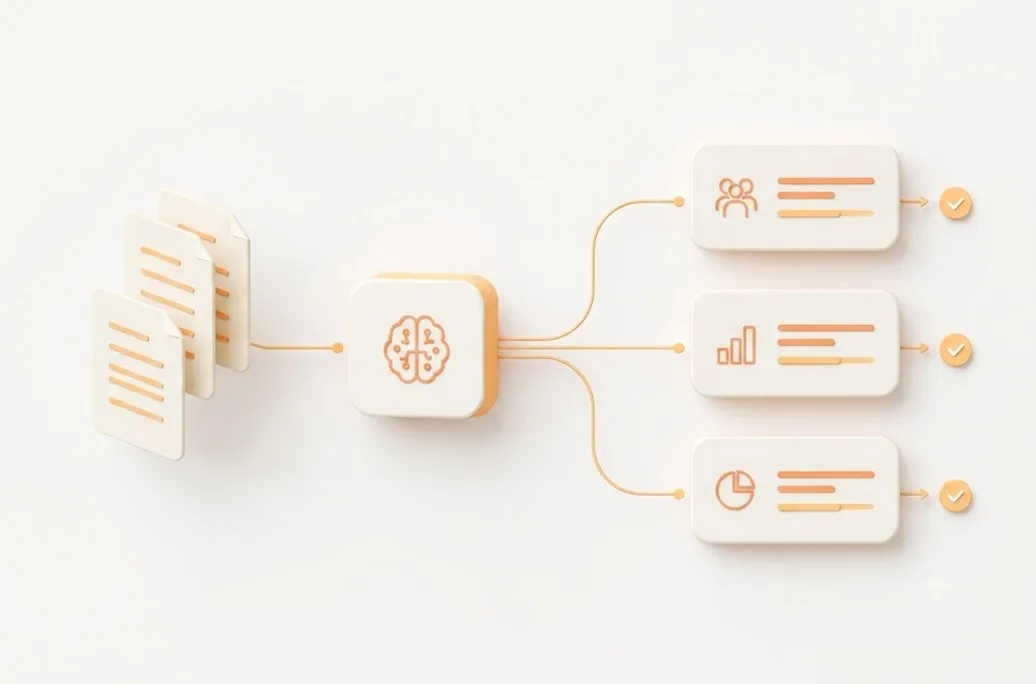
Client Testimonials
Trimate combined strategic thinking with exceptional technical execution. Their modernization and AI expertise significantly accelerated our digital transformation initiatives.
Ready to bring your vision to life?
From first conversation to final delivery clear roadmaps, direct communication, and production-grade software without the jargon.